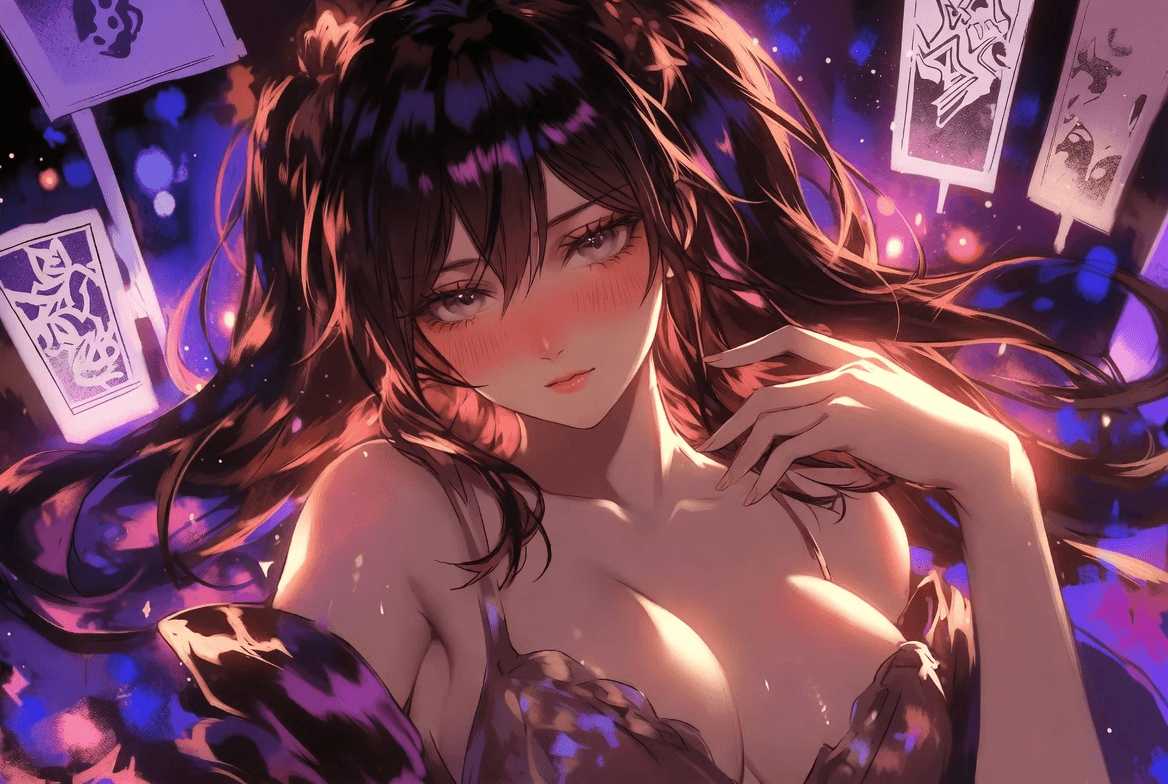
In 2025, for the fifth consecutive year, “hentai” was the most-searched term on Pornhub worldwide. It has held the top spot since at least 2021, outranking “MILF,” “lesbian,” “anal,” and countless other categories. “Anime” also ranks highly in searches. Gen Z consumes it at dramatically higher rates than older generations.
So when people ask, “Is anime pornography just weird imagination?” the data suggests a different framing: it is one of the most popular, imaginative, and psychologically revealing forms of adult fantasy in existence. The real question is not whether it is “weird,” but why it resonates so deeply with millions of people across cultures — and what that reveals about human sexuality, imagination, and the brain’s response to exaggerated stimuli.
What Exactly Is “Anime Pornography” or Hentai?
“Hentai” (変態) originally means “perverse” or “abnormal” in Japanese, but in English usage it refers to explicit Japanese-style anime, manga, and animated adult content. It features highly stylized characters with exaggerated proportions, dynamic expressions (the famous ahegao face), and scenarios limited only by the artist’s imagination — tentacles, monsters, sci-fi, fantasy, transformation, and more.
It differs from Western cartoon porn or general “animated porn” because of its specific aesthetic roots in Japanese otaku culture, production techniques, and cultural context. Some is high-quality professional animation; much is doujinshi (fan-made) or independent creator work. Importantly, this article addresses adult-oriented content featuring adult characters. Any material depicting minors (real or fictional) is illegal in most jurisdictions, ethically indefensible, and outside the scope of legitimate adult fantasy discussion.
The Numbers Don’t Lie: It’s Not Fringe

- Hentai has topped global Pornhub searches for five straight years.
- In surveys, roughly 27% of Americans report having fantasized about cartoon or anime characters at some point (higher among men, gay/bi men, and trans/nonbinary individuals).
- It appeals across genders, though men search for it more; women also consume it, often in specific subgenres.
- Its popularity has grown alongside mainstream anime’s global explosion. What was once niche “weird otaku stuff” is now a mainstream search behavior.
If something is searched more than almost anything else in porn, calling it “weird” says more about the observer’s cultural lens than objective reality.
The Psychology: Why the Brain Loves Exaggerated Fantasy
1. Supernormal Stimuli
Evolutionary psychologists point to supernormal stimuli — exaggerated versions of natural cues that trigger stronger instinctive responses than the real thing. Classic example: birds preferring artificial eggs with more spots than real ones.
Hentai does this with human sexual cues: enormous eyes (signaling youth/neoteny and emotion), tiny waists, exaggerated curves, flawless skin, and hyper-expressive faces. These are “more human than human” — dialed past what biology can produce. The brain’s mate-selection machinery, shaped by evolution for detecting fertility and health signals, responds intensely. This is not unique to hentai; it’s why stylized art has aroused humans for millennia (Venus figurines, Greek sculpture, Japanese shunga).
2. Personality and Attachment Patterns
Research by Dr. Justin Lehmiller (Kinsey Institute) found hentai-related fantasies linked to:
- High active imagination (people who fantasize a lot about everything).
- Lower extroversion and conscientiousness (more comfortable with abstract, less “realistic” scenarios).
- Higher anxious or avoidant attachment and neuroticism.
For some, fictional characters provide emotional safety: no rejection, no performance pressure, pure fantasy. For others, it offers a controlled space to explore taboo or intense themes without real-world consequences.
3. Safe Exploration of Taboo and Novelty
The human brain craves novelty and variety. Hentai delivers infinite variety — impossible bodies, impossible acts, impossible worlds — without exploiting live performers in the same way live-action can. For people with active fantasy lives, this is liberating rather than “weird.”
Fantasies do not equal desires or actions. Research consistently shows most people with “extreme” or non-normative fantasies have no interest in enacting them and maintain healthy real-world boundaries.
Cultural Context: “Weird” Is Often “Unfamiliar”

Western viewers sometimes label hentai “weird” because of cultural differences:
- Japan’s historical comfort with erotic art and fantasy (ero guro traditions, separation of fiction and reality in some contexts).
- Different attitudes toward youth aesthetics in media (school uniforms as fashion/cultural trope vs. literal age).
- Stronger Western Puritan-influenced discomfort with explicit animation.
Japan has its own strict censorship (genital mosaics) and debates, but anime’s global spread has normalized stylized adult animation for many. What feels alien in one culture is everyday fantasy fuel in another.
Is It Harmful? A Nuanced, Evidence-Based View
Like all pornography, outcomes depend on the person, the content, frequency, and why they’re watching.
Potential upsides:
- Private, victimless outlet for fantasy.
- Creative and artistic expression.
- For some, easier emotional access than live-action due to the fictional barrier.
Potential downsides:
- Desensitization and escalation: Any highly stimulating porn can raise the bar for arousal over time. Hentai’s novelty and extremity can accelerate this for susceptible individuals.
- Unrealistic expectations: Perfect bodies, endless stamina, and stylized consent dynamics can distort views of real partners and sex if not balanced with reality.
- Specific subgenres: Content glorifying non-consent, extreme violence, or featuring underage-appearing characters is genuinely problematic. It can reinforce harmful scripts for some viewers. Responsible adult hentai avoids or clearly frames these.
- Compulsive use: If hentai becomes the only way someone can feel aroused or is used to avoid real intimacy/stress, it can contribute to sexual dysfunction or relational issues — same as any porn or coping mechanism.
Studies on porn in general show mixed results. Frequency alone is a poor predictor of harm; motivation and pre-existing mental health matter more. Recreational use by well-adjusted adults who maintain real-life relationships is rarely catastrophic.
The “Weird Imagination” Defense — And Why It’s Actually a Feature

Yes, it is weird imagination. That’s the point.
Human sexuality has always involved imagination — from ancient erotic myths to modern erotica. Animation simply removes physical limits. Tentacles, body transformation, public scenarios with zero consequences, emotional connection with impossible beings — these are creative expressions of desire, not evidence of brokenness.
Calling it “weird” often reveals discomfort with the idea of sexual fantasy itself, or with styles outside one’s personal taste. Millions of people enjoy hentai without it defining or damaging their lives. Their imagination is vivid, not defective.
The healthiest approach: Treat it as fantasy. Enjoy it responsibly. Don’t let it replace real connection if you want real connection. And extend the same non-judgment to others’ private fantasies that you want for your own.
Practical Takeaways
- If you enjoy it: You’re in good company statistically. Consume mindfully. Notice if it’s affecting real-life arousal or relationships.
- If it’s becoming a problem: Reduce frequency, diversify stimuli, address underlying stress/loneliness, or speak with a sex-positive therapist. Compulsive porn use is treatable.
- For partners: Many people enjoy multiple genres. Hentai interest doesn’t mean someone prefers drawings to you — it often means they like variety and fantasy.
- Broader lesson: Sexual imagination is vast. “Normal” is a moving target. What matters is consent, legality, and whether your habits support or undermine your well-being.
Conclusion: Not Weird — Human
Anime pornography is not some bizarre deviation. It is a technologically enabled, culturally specific, psychologically understandable expression of the human capacity for fantasy. Its massive popularity proves that the brain responds powerfully to exaggerated beauty, emotional intensity, and impossible scenarios.
The question “Is it weird imagination?” has a simple answer: Yes — and that’s exactly why so many people love it.
Imagination is one of humanity’s greatest gifts. When channeled into private adult fantasy between (fictional) consenting adults, it harms no one. The real weirdness would be pretending that human desire is simple, uniform, or limited to what live-action cameras can capture.
Hentai didn’t create weird sexual imagination. It just visualized it better than almost anything else.
Frequently Asked Questions

Is watching hentai normal?
Statistically yes. It tops global porn searches year after year. Millions consume it without issue.
Does hentai mean someone isn’t attracted to real people?
Research shows hentai consumers rate real humans as equally attractive and desire real relationships at similar rates. It often supplements rather than replaces.
Is all hentai problematic?
No. Much is adult fantasy. However, subgenres involving minors or non-consensual acts glorified as positive are harmful and often illegal. Choose and create responsibly.
Can hentai cause addiction or sexual problems?
Any highly stimulating content can contribute to escalation or desensitization in vulnerable people. Moderation and self-awareness are key, as with any media or habit.
Why does it use schoolgirl or youthful aesthetics?
Cultural tropes in Japanese media. Many viewers and creators treat characters as clearly adult. When it blurs into actual minor depiction, it crosses ethical and legal lines.
This article is based on psychological research, large-scale platform data, and cultural analysis. Sexual preferences vary enormously — the healthiest stance is informed, non-shaming curiosity about what turns people on and why.